An AI SDR is software that takes on sales-development tasks such as outreach, lead qualification, or meeting preparation. Before you delegate a wider role, define the job you need completed: account research, a usable outreach draft, or a conversation handed to sales. Evaluate the system against that job and the work your team must still do.

Table of contents
What does an AI SDR actually take responsibility for?
You're looking at an AI SDR demo. It finds an account, writes an email, and offers to manage the follow-up. The sequence looks complete. Your buying decision is still unresolved: which part of your current work is actually stuck? If reps already have relevant conversations but lack research time, conversation automation may add a new operating burden without addressing the delay you want to remove.
SDR stands for sales development representative. Salesforce's AI SDR guide, checked on November 2, 2026, describes a software role covering top-of-funnel outreach, engagement, and lead qualification. It also describes meeting scheduling and human handoff. That definition is useful, but you still need to ask which of those responsibilities the product in front of you performs, under what configuration, and with what result for the next person.
Salesforce's implementation advice makes that question concrete: define the agent's role and tasks, give it operational boundaries, and assess its responses and capabilities. You can apply the same discipline to a purchase. Ask the vendor to complete a specified job using your material, then inspect the result. A polished generated message demonstrates writing ability. It leaves qualification, exception handling, and the receiving rep's work to be examined separately.
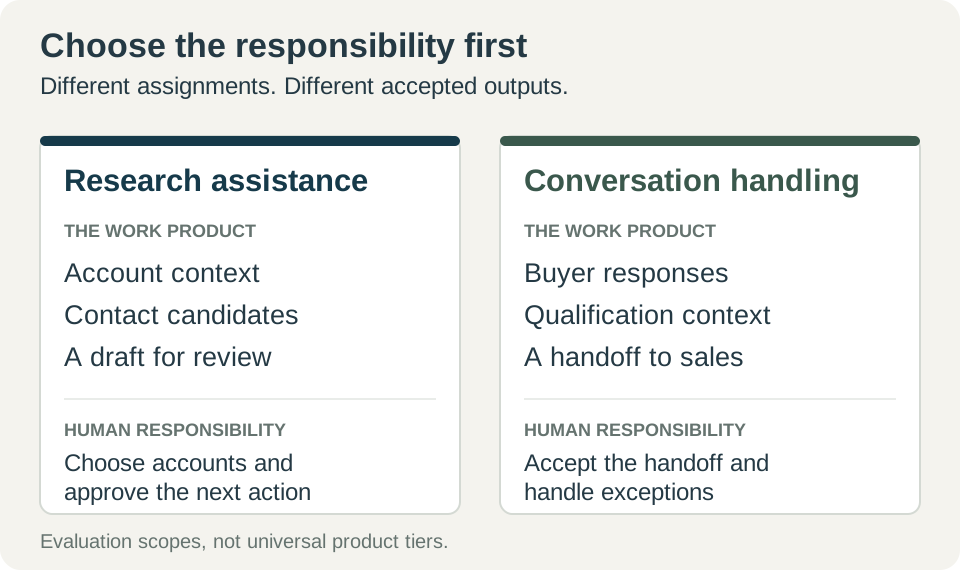
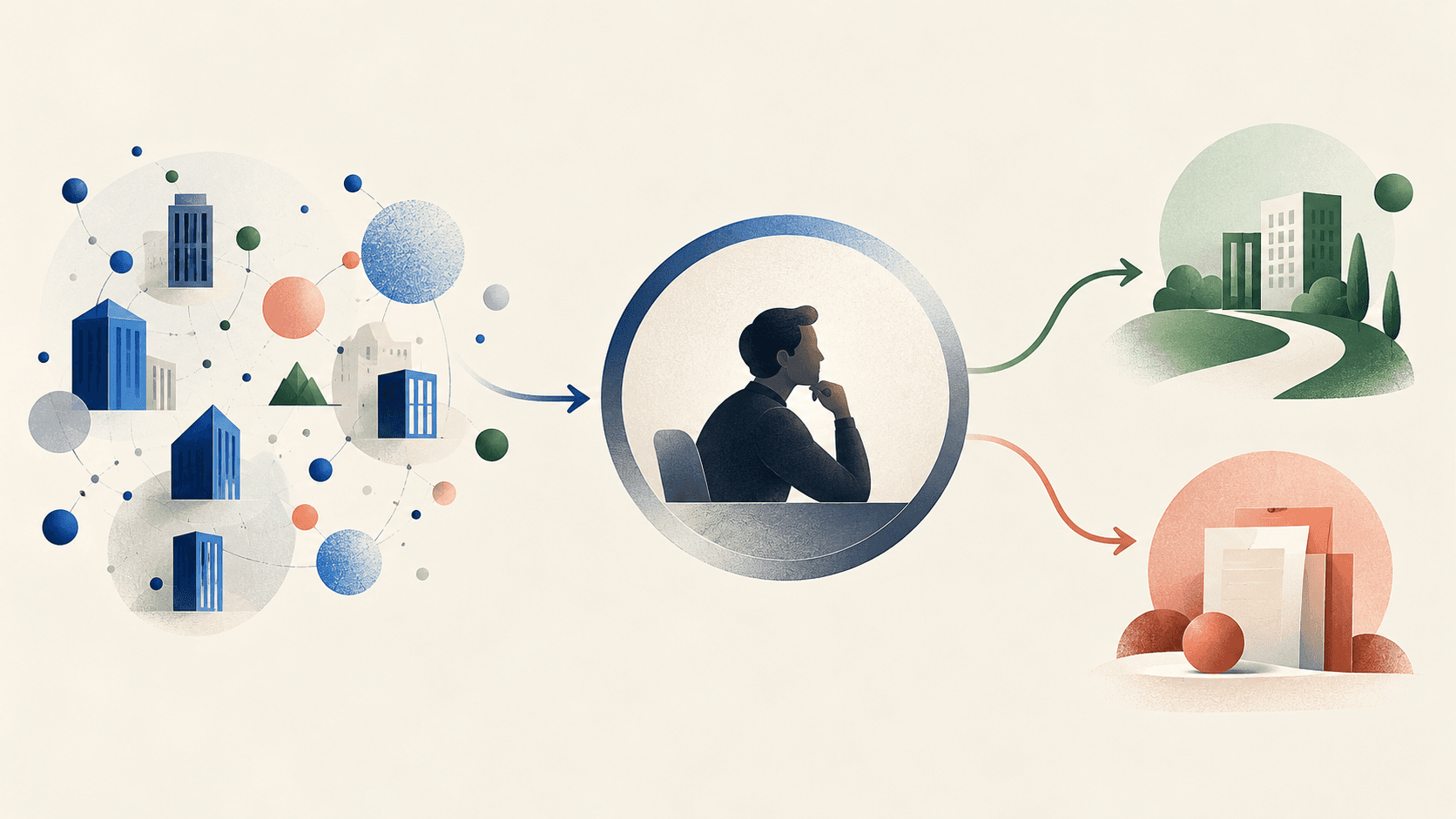
These are evaluation scopes, not a ranking of AI SDR products. · Editorial decision aid
A contact record is not a qualification decision
Keep two questions separate. Does this company and contact fit your target profile? Has the prospect actually confirmed enough about the problem, timing, or next step for sales to proceed? You may have a useful contact before you have any answer to the second question. In your evaluation, name the qualification criterion and the evidence needed to satisfy it; don't let an available email address stand in for a buyer conversation.
Which job is slowing your sales team down?
Write down the deliverable your rep is waiting for. For a research job, it might be a short account brief explaining fit, uncertainties, and a plausible contact role. For an outreach-preparation job, it is a draft tied to that account and your actual offer. For a conversation-handling job, it is a response history and an explicit next step that a named person can accept. These are proposed evaluation deliverables; they are not standardized product tiers.
For a documented example of the wider job, Salesforce's Agibank customer story, checked on November 2, 2026, describes a lead-qualification workflow using campaign engagement, customer context, and eligibility data. It also describes retrieving knowledge articles to address questions before continuing qualification and handing prospects to sales. This is Salesforce's account of its customer deployment, not an independent test or evidence of results for another business.
Specify what the receiving rep must accept
The Agibank example gives you a sharper demo question: what context must already exist for this agent's job to work? If you're evaluating industrial outbound, you cannot borrow a lender's eligibility process as your own qualification model. Ask for your offer, your questions, and your handoff destination. Can the receiving rep see what the prospect said, what remains unknown, and why the next action is appropriate? Treat those as acceptance conditions you set, then test them.
Test the conversation handoff before widening the scope
Start with how the conversation begins. Salesforce distinguishes inbound sales, where a prospect approaches the business, from outbound sales, where your team initiates contact. An inbound qualification demonstration does not establish that a product can research unfamiliar cold accounts or choose an appropriate outreach reason. If you're buying for outbound, require that part of the job in the demonstration. If inbound response is your bottleneck, begin with the incoming inquiry and your routing criteria.
Then ask what happens after the first reply. AiSDR's incoming-messages help article, checked on November 2, 2026, describes automated conversations based on configured persona FAQs, stopping outreach after detected negative replies, and handling out-of-office messages. The same article documents a more specific handoff detail: replies stay in its dashboard rather than automatically arriving in your regular inbox. Moving the conversation requires a manual reply that includes your work mailbox in CC.
That detail can matter more to your operating plan than an attractive first email. If the person responsible for follow-up never checks the dashboard, you have not established who will act next. You need to see the actual transition in the configured product, including what happens to the active sequence. AiSDR documents separate manual-send options that either prevent further generated outreach or keep the sequence active. Neither option should remain an unexplained assumption in your pilot.
Ask the demo to handle an awkward reply
Use test messages for the situations your team worries about: an explicit refusal, a vague request for information, an absent contact suggesting a colleague, and a question your approved material cannot answer. Ask the vendor to show the resulting state, any newly added recipient, and the assigned human owner. These are proposed acceptance tests, not a claim that every product handles each case automatically. Record a failed or unsupported case plainly; it tells you which responsibility must stay with your team.
Choose an AI SDR pilot around a usable work product
Consider a hypothetical industrial-sensor supplier evaluating AI SDR tools. Assume its salespeople can conduct technical conversations, but spend too much time finding relevant equipment distributors in Germany and France. Its product catalog is available; verified buyer demand is not. Under those assumptions, start the pilot with an account-research deliverable. The team needs to decide whom to investigate, not ask a model to invent purchasing intent or answer technical objections without evidence.
OKKI Go's official use cases describe a relevant, narrower capability. You provide product context, target markets, buyer roles, and exclusions; the agent returns candidate companies. You review those companies and confirm selective unlocking, then inspect available contacts. With company context and your supplied product material, the agent can prepare outreach drafts. You confirm the recipients, subject, and body before sending. The usable result is a reviewed candidate set and a draft you can revise, not proof that a prospect is ready to buy.
For this hypothetical team, keep the first assignment at research and preparation. If the results repeatedly require the seller to rebuild the account brief, record that rework before expanding scope. If the research is usable but incoming conversations become the next bottleneck, evaluate reply handling as a separate assignment. The OKKI Go use-case page cited here does not establish autonomous reply qualification or meeting booking, so those capabilities cannot be assumed from the earlier search-and-draft demonstration.
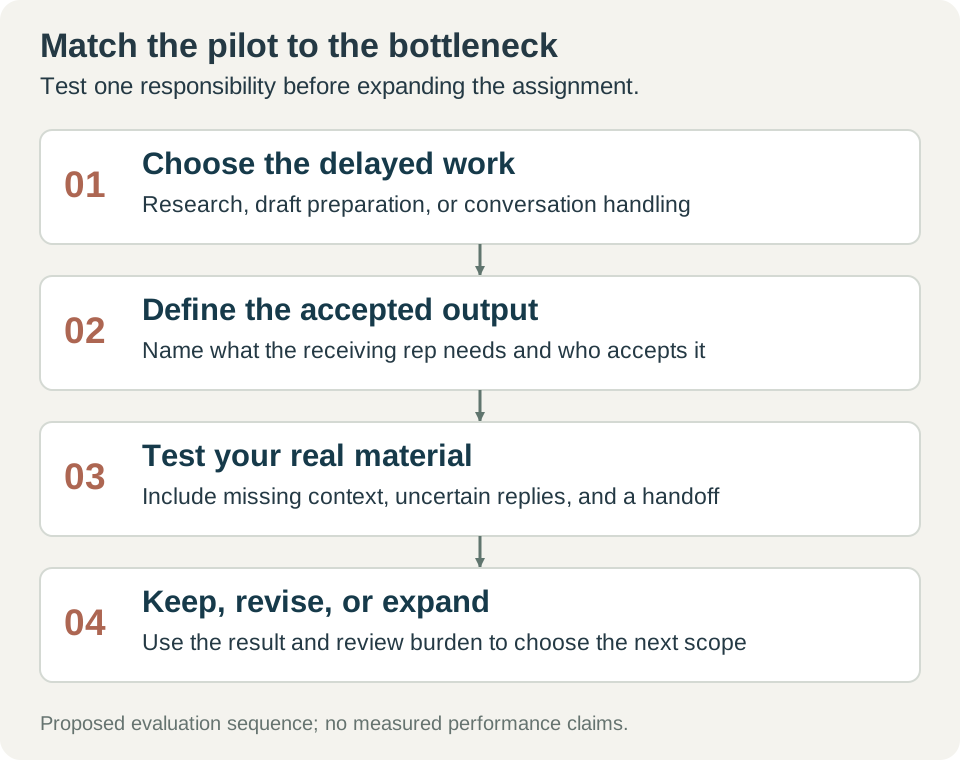
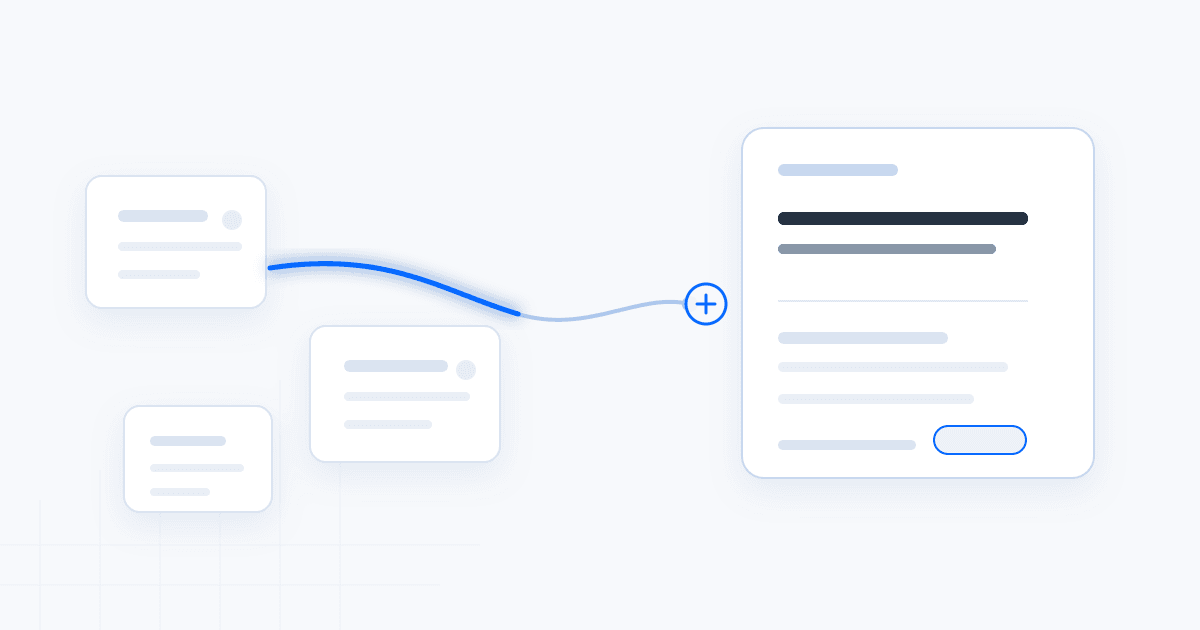
A proposed evaluation sequence; no performance thresholds or customer results are implied. · Editorial decision aid
Before choosing a wider AI SDR, ask the vendor to show the whole work product: the source context, what the system changes or sends, an uncertain case, and the handoff to the next person. Evaluate both the useful output and the review burden. Set your acceptance threshold before running the pilot, using your existing process as the reference. A narrow tool can be sufficient when the missing work is narrow; a broader agent still has to demonstrate the extra responsibilities you're paying it to take on.
Leave the next demo with an assignment you can describe plainly: the work the AI completes, the result your team accepts, and the person responsible when it cannot finish. If you can test those on your own material, you have a basis for choosing an AI SDR. If you can't, keep the scope small until the missing responsibilities are demonstrated.
Frequently asked questions
What is the difference between an AI SDR and an AI research assistant?
An AI research assistant can prepare account context and contact candidates. An AI SDR may also take responsibility for outreach, conversations, qualification, or scheduling. The label alone does not establish that scope. Ask which responsibilities the configured product performs and what it passes to a human.
Do I need an AI SDR if my main problem is finding relevant companies?
You may only need company discovery and research assistance. Begin by testing whether the output helps your team select plausible accounts and contacts. Add conversation automation only when it addresses a separate, demonstrated need and you have an owner for its exceptions.
Can I assume an AI SDR forwards replies to my normal inbox?
No. Check the product and configuration. AiSDR documents dashboard-based replies and a manual CC step for moving a conversation to a work mailbox. Your pilot should verify where responses appear, who receives them, and whether automated follow-up stops after the human takes over.
What should an AI SDR pilot measure besides messages sent?
Choose measures tied to the assignment: usable research, required corrections, review effort, unresolved replies, and handoffs accepted by sales. Define what counts before the test. Message volume alone cannot show whether the work product meets your team’s needs.